

Discover our images of the Auguste Herbin exhibition at the Musée de Montmartre


Auguste Herbin is, according to legend, the best kept secret of modern art... But who was he really? Fauve artist, supporter of colorful cubism or great figure of geometric abstraction, this resident of the legendary Bateau-Lavoir was all of these at the same time, embracing each trend of his time, following each creative break of the 20th century and moving effortlessly from post-impressionism to the monumental object, from the second abstraction to the new figuration. His realistic about-face and the development of his own “plastic alphabet” definitively lost criticism, condemning the painter to the rank of forgotten master… until today.
The Montmartre Museum sheds a new light on the versatile and original work of Auguste Herbin in an explosion of geometric figures where color is king. Articulated around the artist's seven creative periods, the exhibition reveals each facet of the painter, thus painting through the canvases a rigorously detailed portrait of this tireless colorist once prized by Shchukin and Morozov. These countless comings and goings between figuration and abstraction allow us here to glimpse another face, that of a man who was part of all revolutions.
Discover our video here.

Focus on...
HERBIN PORTRAITIST
Paris, 1907. Auguste Herbin had not yet met Pablo Picasso – then in the midst of preparing his scandalous Demoiselles d'Avignon – nor Georges Braque – too obsessed with his landscapes of l'Estaque – and thus sketched the portrait of this pretty young girl in a tawny vein. The quick yet structured touch and the brush strokes visible to the naked eye emphasize the blue gaze of this cold beauty in the prime of her life.

Focus on...
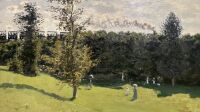
HERBIN LANDSCAPE
With Herbin, things move quickly. Just a few months after his charming Portrait of a Young Girl in Flower, the painter definitively joined the Fauves and signed this sparkling canvas with large areas of green colors, enhanced with a few touches of purple. A few more days and the artist tries his hand with some talent at cubic compositions.

Focus on...
ABSTRACT HERBIN
When Auguste Herbin takes the turn towards abstraction, the artist does not do things by halves. Like Baudelaire's Correspondences and Rimbaud's Voyelles, the painter goes so far as to develop his own alphabet, imagining a poetic abecedary made of yellow triangles, orange circles and pink semi-circles. Here, each letter corresponds to a shape, a color and a musical note.