

Charred Papyri Reveal Secrets About Plato


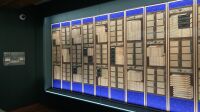
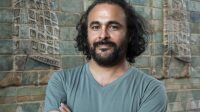
It was a revelation that had the effect of a bomb. Carbonized papyrus scrolls from Herculaneum, once considered indecipherable, have opened up to researchers thanks to the most recent technological advances. This dazzling discovery promises to greatly enrich our understanding of the famous ancient philosopher, Plato, and his time. The saga begins with the cataclysmic eruption of Mount Vesuvius in AD 79, which buried the city of Pompeii in ash, but also preserved a treasury of papyrus in the Villa of the Papyri in Herculaneum. These scrolls, which remained mysteriously inaccessible for a long time due to their fragility, have begun to reveal their secrets thanks to the use of new cutting-edge technologies. Among the most striking discoveries are previously unseen fragments of letters, revealing a revised biography of Plato. Under the able guidance of Professor Graziano Ranocchia of the University of Pisa, these texts were analyzed using an ingenious combination of optical coherence tomography and infrared hyperspectral imaging. Thanks to these methods, nearly 1,000 Greek words, once lost, have been restored, opening a window into the past. The account reveals intriguing details about Plato's life, including insights into his possible period of slavery and the circumstances of his death.

According to these parchments, Plato may have been enslaved during the conquest of the island of Aegina by the Spartans or shortly after the death of his master, Socrates, which calls into question certain ideas about his social status and his journey. The legendary last night of the philosopher is told differently. Here it seems that the ill master was somewhat annoyed by the flute notes of a musician who came to surround him with music. Small details certainly, but which add humanity and flaws to the often revered figure of the philosopher. Without doubt the most striking revelation of these writings would be the supposed location of Plato's burial. While previously believed to have been buried near the Academy of Athens, it now appears that his final resting place was in a private garden, near a shrine to the Muses.