

Exhibition The Workers of the Sea by Victor Hugo at Maison Vacquerie
Maison Vacquerie - Victor Hugo Museum
Until September 29, 2024
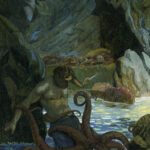
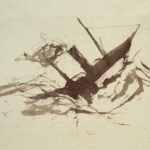
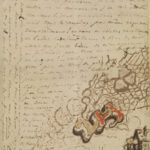
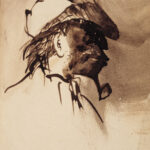
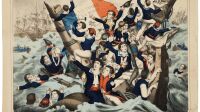
In the cozy atmosphere of the Maison Vacquerie - Victor Hugo Museum, you can go behind the scenes of the writing of the famous novel Les Travailleurs de la mer. Exiled for more than a decade on the Anglo-Norman island of Guernsey, Hugo finds in this “rock of hospitality and freedom” an inexhaustible source of inspiration. It is to this unique environment, battered by the waves and nourished by maritime legends, that the writer dedicated his novel in 1866. Through original annotated manuscripts, sketches, drawings and engravings signed by his hand, the exhibition brings us delves into the creative intimacy of Victor Hugo, following him at each stage of his creative process, from the first drafts to the culmination of a monumental work that will mark the history of literature. His tormented landscapes of the island, its steep cliffs and its tumultuous waters captured with striking intensity by his lively line and his misty washes find their echo in his meticulous and poetic writings, transforming this natural setting into a protagonist in its own right. Newspaper articles, literary criticism and period correspondence retrace here the reception given to this innovative work, deeply rooted in its time, placing the Durande, the first steamboat in the Channel, at the heart of the plot. Between love and tragedy, we follow the quest of young Gilliatt, this solitary and romantic sailor, who will sacrifice his love in the face of the raging elements, as a poignant metaphor for the fragility of human destiny against the implacable forces of nature. A moving odyssey, in these places where once upon a time, the poet lost his dearest Léopoldine in the waters of the Seine.
To go further…
The Maison Vacquerie-Musée Victor Hugo, nestled in the heart of the peaceful village of Villequier, is a place where time seems to have stood still, preserving the soul and the history of two tragically tragic families. linked. The double evocation of the Hugo and Vacquerie families resonates as a poignant tribute to the tragedy that occurred on September 4, 1843, when Léopoldine Hugo and Charles Vacquerie drowned in the Seine, not far from the house. This tragic event forever seals the destiny of the two families, united in pain and memory, their graves resting together in the Villequier cemetery, joined later by Adèle, wife of Victor Hugo, and their youngest daughter, also named Adèle.
Each room in this house museum gives us a part of the literary and human heritage of Victor Hugo. On the ground floor, the living room is dedicated to Auguste Vacquerie, Hugo's faithful friend and collaborator. Journalist and writer, Vacquerie was a secular and republican spirit, whose career is illustrated by various objects and works, such as the bronze bust of Jules Dalou and the portrait painted by Pierre-Paul Léon Glaize. The billiards room, with its cozy atmosphere, has retained its 19th th century character, conducive to lively discussions and games that punctuated the life of the house. Today, it hosts temporary exhibitions and cultural events, thus perpetuating the lively and friendly spirit of the house.
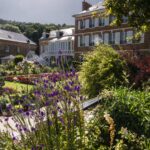
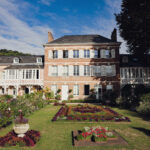
Upstairs, the pink room evokes the world of childhood and Victor Hugo's tender gaze on his grandchildren, transporting us into the writer's intimate family life. Family portraits, souvenirs and personal objects enrich this soft and nostalgic atmosphere. The red room, dark and rococo, seems straight out of a Gothic novel, evoking Adèle Foucher, wife of Victor Hugo. Sculptures and paintings depict a middle-aged woman, recalling Madame Hugo's multiple stays with the Vacqueries, often accompanied by her children. Not far from there, the Bow window, for its part, is a tribute to Juliette Drouet, the tireless companion and muse of Victor Hugo, who shared his travels and his exiles, sacrificing her theatrical career to her love for the poet.
The clear room and the blue room are sanctuaries dedicated to Léopoldine Hugo and Charles Vacquerie, retracing their lives, their marriage, and the drama of their drowning through letters, press articles and personal objects. The reconstruction of their room in Le Havre, faithful to a watercolor by Louis Boulanger, offers a moving insight into their lost intimacy.
A place of memory, but also a living space where the past and the present meet, where the personal history of the Hugo and Vacquerie families mixes with the literary and political history of 19th century France century, giving us a part of the soul of Victor Hugo, a reflection of his passion, his struggles and his humanity.
MAISON VACQUERIE - VICTOR HUGO MUSEUM
Until September 29, 2024
Quai Victor Hugo, 76490 Rives-en-Seine