

Silla, gold and the sacred at the Guimet Museum
GUIMET MUSEUM
From May 20 to August 31
A Kingdom Emerges from the Shadows
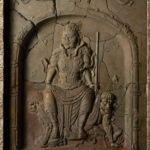
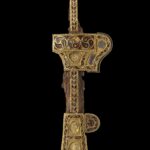
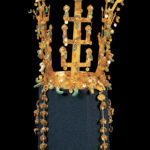
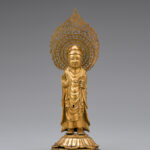
For nearly a millennium, the Silla kingdom reigned over the Korean Peninsula, producing one of the most refined civilizations in East Asia. Its intricately carved gold crowns, jade ornaments, and exquisitely crafted Buddhist reliquaries have survived the centuries, buried in immense tomb-mountains or preserved in monasteries. Until now, they had never left South Korea. The Guimet Museum is presenting them for the first time in Europe. This is an event in the truest sense of the word.
The exhibition brings together an exceptional collection of Korean national treasures—gold crowns, belts, and pendants, intricately crafted jewelry, and figurative sandstone. These are pieces that even specialists have only ever seen assembled in Korea, in the city of Gyeongju, the former capital of Silla, nestled between forested mountains and rolling plains, where pagodas, royal burial mounds, and a contemporary city coexist in a unique dialogue between past and present. From the mythical origins of the kingdom to the great dynasties that shaped it, the exhibition retraces the extraordinary history of gold.
This gold, which from the 4th to the 6th century became the dazzling signature of a power in full assertion—a political symbol as much as an artistic one, testifying to a kingdom open to the trade routes linking Japan, China, Central Asia and even the Mediterranean world. Until Buddhism, in the unified Silla, transformed this art of prestige into an art of the sacred: precious materials left the tombs to inhabit monasteries, pagodas, and reliquaries. A millennium of civilization, condensed into a journey to the heart of Paris.
GUIMET MUSEUM
From May 20 to August 31, 2026
6 Place d'Iéna, 75116
Metro: Iéna (Line 9)
Wed. to Mon., 10 a.m. to 6 p.m.
Closed on Tue.
Price: €15 - Reduced price: €12 - Free for under 18s