

Follow the thread: behind the scenes of the blockbuster exhibition in Toulon
TPM Arts Hotel
Until October 31, 2026
Solidified macramé, felt encased in resin, silk cocoons… Design is not just about a set of chairs! In the exceptional setting of the Hôtel des Arts, a unique exhibition restores textiles to all their beauty and power. From Sonia Delaunay to Dominique Perrault, the exhibition sensitively inscribes within us a true history of forms.
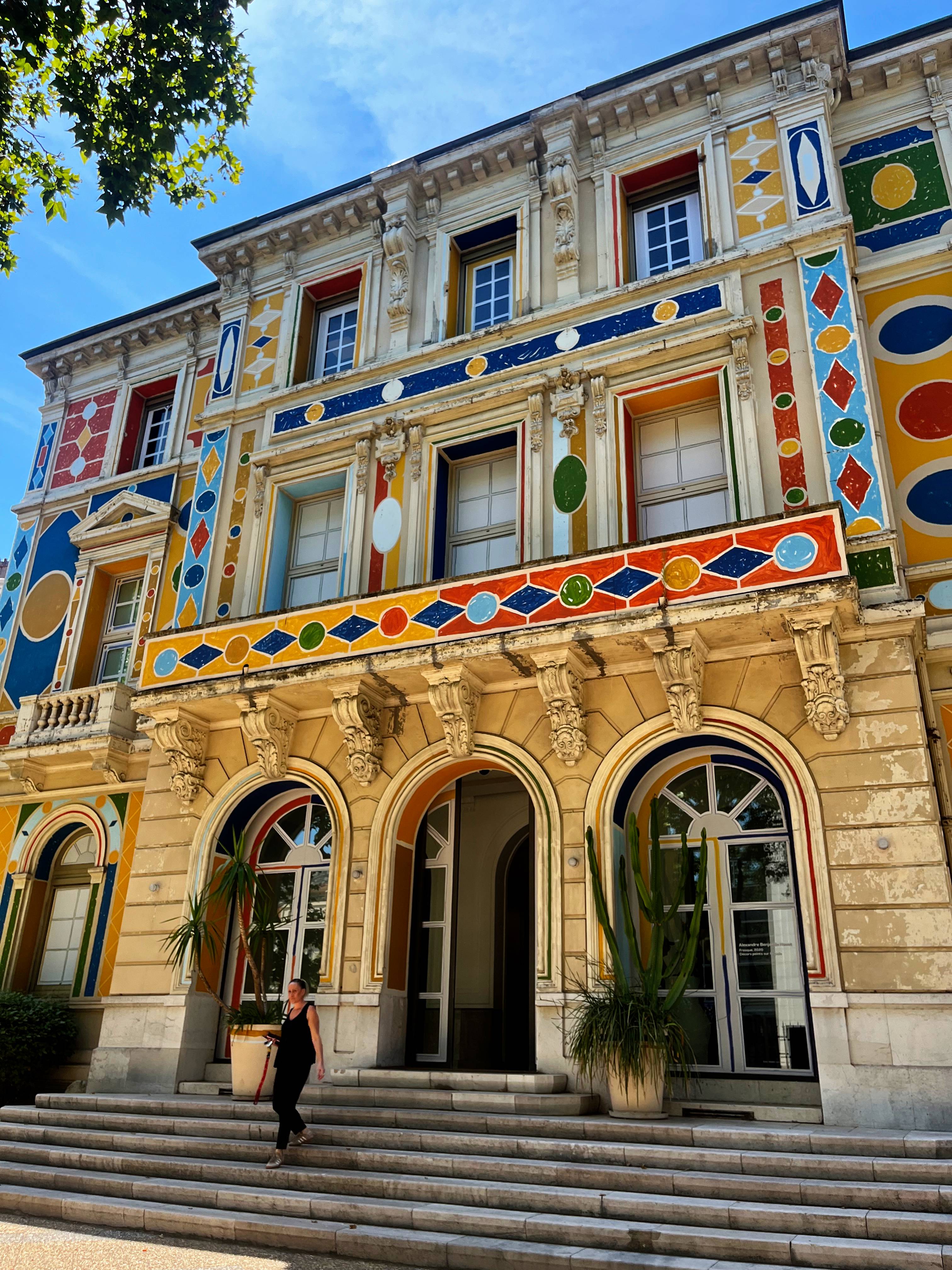
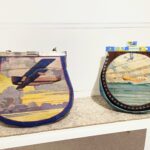
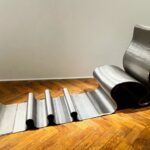
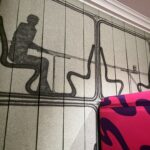
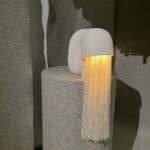
Our journey begins at Toulon train station. Simply walk down the street that leads to the sea, but stop five minutes further down, in front of the majestic Hôtel des Arts. A colorful façade, composed of radiant forms, awaits us. Then, climb the steps to the entrance and wait a few seconds for the glass doors to open. A cool breeze reaches us, and we almost forget the sun that floods the entire port city. There, an exhibition on two levels and eleven spaces complements the elegant architecture of the Hôtel des Arts.
Textiles as an entry into the world of forms
Marie-Ange Brayer, head curator of the design department at the Centre Pompidou,Lucile Montagne, chief curator at the Mobilier National, accompanied by Anna Izard and Thomas Hochet, together, and with exceptional loans from the National Center for Visual Arts (Cnap)and the Museum of Decorative Arts (MAD), imagine the 6th edition of the partnership established in 2023 between the Hôtel des Arts in Toulon and the institutions in charge of furniture national. Here, one hundred works tell the story of how textiles have become, in just a few decades, an essential medium of design, after having long been marginalized and relegated to a worthless craft. The exhibition adopts both a chronological and thematic approach, punctuated by monographic focuses that highlight the major figures in textiles. It opens with the avant-garde movements in Germany and France, with the Bauhaus and its famous weaving workshop, where textiles became a true laboratory of creation. A particular favorite is the work of Sonia Delaunay , exploring form and color in small, highly sensitive works on paper. Next come the 1960s and the explosion of pop culture. Pierre Paulin revolutionized design during this period: he worked with foam and gave primacy to textiles, reducing the structure of his armchairs to just a few iron hoops. While samples from Artifort bear witness to this new way of designing furniture, the exhibition also shows how artists gradually moved beyond the simple tapestry cartoon to explore the third dimension. This movement, embodied by the New Tapestry within the National Manufactories, transformed textiles into sculpture and space. It was all about three-dimensionality. A focus is also devoted to Simone Prouvé. Trained for twelve months in Scandinavia in the 1950s, she returned to Nancy with a veritable textile herbarium, enriched by documentary photographs. A collaborator of Charlotte Perriand, she constantly experimented with new materials, even incorporating optical fibers into her creations. She eventually gave up weaving, which had become too physically demanding, but continued her photographic work until her death in 2024.
A unique scenography
The scenography, conceived by Emmylou Doutres and Clément Rosenberg, is one of the central themes of this sixth edition, which brings together around one hundred works. Their ambition is not to forget textiles, but rather to make them their subject. "How do you present textiles through textiles?" they summarize. Their answer lies in a scenographic approach based on a vast textile covering, creating chromatic and dimensional correspondences between the works. The exhibition designers also chose to reuse the display cases from previous editions, "dressing" them with new textiles. This dressing principle echoes both the exhibition's theme and the work of the artists themselves. Fibers, colors, shaping, and spatial arrangement thus engage in a dialogue within a journey where wool and linen, sourced from major agricultural sectors, reclaim their place as fundamental materials. The scenography, using panels of fabric, also evokes the acoustic, sensory, and domestic qualities of textiles, affirming their essential role in inhabited spaces, where they become simultaneously materials of comfort, architecture, and creation.
An unexpected selection: from unknowns to leading figures. The exhibition continues with a selection of masterpieces from the history of design before addressing the contemporary challenges of textiles, now conceived as sustainable materials capable of renewing industrial design. Recent creations demonstrate research where technical innovation and ecological awareness advance in tandem. The exhibition gives prominence to the work of Jeanne Vicerial, who developed "knitting," a technique created using a single thread unspooled over several kilometers. Her works, somewhere between clothing, skin, and anatomy, explore the body as a living envelope. Nourished by the theme of the flayed figure, her 2020 residency at the Villa Medici marked a fruitful dialogue with Antiquity, giving rise to figures with mythological presences, such as Mue, where textiles become flesh, viscera, and metamorphosis. Upstairs, the creations of Chloé Bensahel bring song and textile matter into dialogue, while Dominique Perrault and Gaëlle Lauriot-Prévost push the boundaries of the material with their steel weavings, capable of structuring and reconfiguring lived space. This openness to contemporary design is also reflected in the acquisition policy of the Mobilier National, which, since 2020, has enriched its collections through galleries and self-publishing. The exhibition thus brings together works as surprising as felt networks, felt encased in resin, silk cocoon lamps, solidified macramé, compressed textiles, and experiments blending industry and wool knitting. These creations remind us that design is not limited to a collection of chairs. Architecture itself becomes textile with Studio Bouroullec, which imagines flexible environments where design shapes the space as much as it inhabits it. A dialogue is also established with paper, a fragile yet infinite material, whose qualities recall those of thread: lightness, flexibility, and the potential for metamorphosis. Finally, the journey concludes with the world of Hella Jongerius, a leading figure in Droog Design. Between whimsical dimensions, rope braids that become ladders, and installations reminiscent of altars, her works affirm the full narrative power of textiles and their capacity to conquer the marvelous.
We leave the Hôtel des Arts, half-dreaming, half-questioning. How could we have overlooked so many brilliant artists? How many stories remain to be woven?
HÔTEL DES ARTS TPM
From June 27 to October 31, 2026
236 bd Maréchal Leclerc, 83000 Toulon