

HEY! Fabulous Familiar at Val Fleury: art emerges from materials we thought unworthy
LE VAL FLEURY
From October 16, 2026 to January 31, 2027
From October 16, 2026 to January 31, 2027, the Val Fleury in Gif-sur-Yvette hosts HEY! Fabulous Familiar, free admission: brought together by Anne Richard, ten artists create works of art using seashells, buttons, bones, and nail polish. Strange, or rather, fabulous.
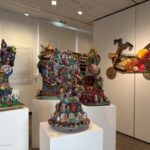
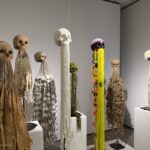
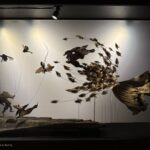
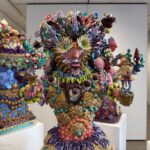
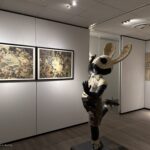
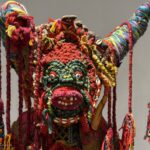
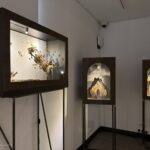
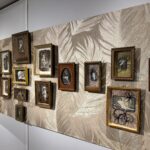
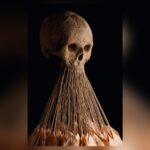
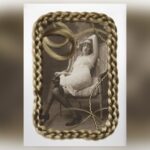
A papier-mâché skull encircled with a 19th-century Chinese rope. A taxidermied mouflon dressed in fabric, a rider on its back. Hair sewn onto an erotic photograph from 1930. Strange. Or rather, fabulous. In this group exhibition, ten artists bring forth art from materials that no one deems worthy of it: seashells, buttons, fish bones, nail polish, glitter, bones, sand, eggshells.
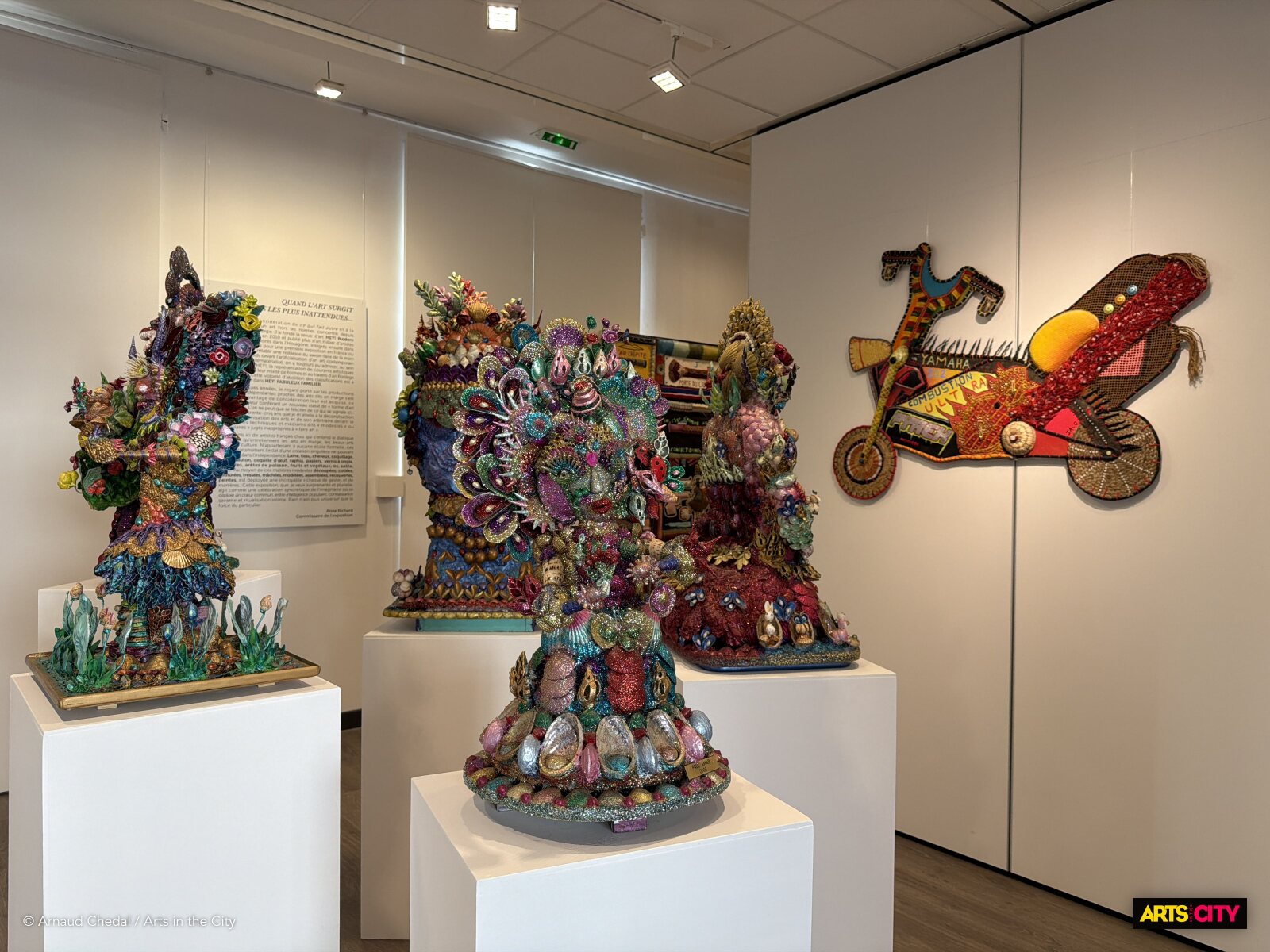
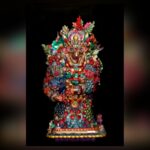
Paul Amar (1919-2017) discovered the art of shell art by chance while on vacation in the Vendée region of France in 1974. He was fifty-five years old. In his apartment in the 19th arrondissement of Paris, he ground, chiseled, and assembled mussels, periwinkles, and sea urchin shells to create dreamlike scenes, then figures covered in glitter and presented in illuminated frames. Discovered in 1985, his work is now included in the collections of Art Brut in Lausanne, the Visionary Museum in Zurich, and La Fabuloserie. Here, The Imaginary King.
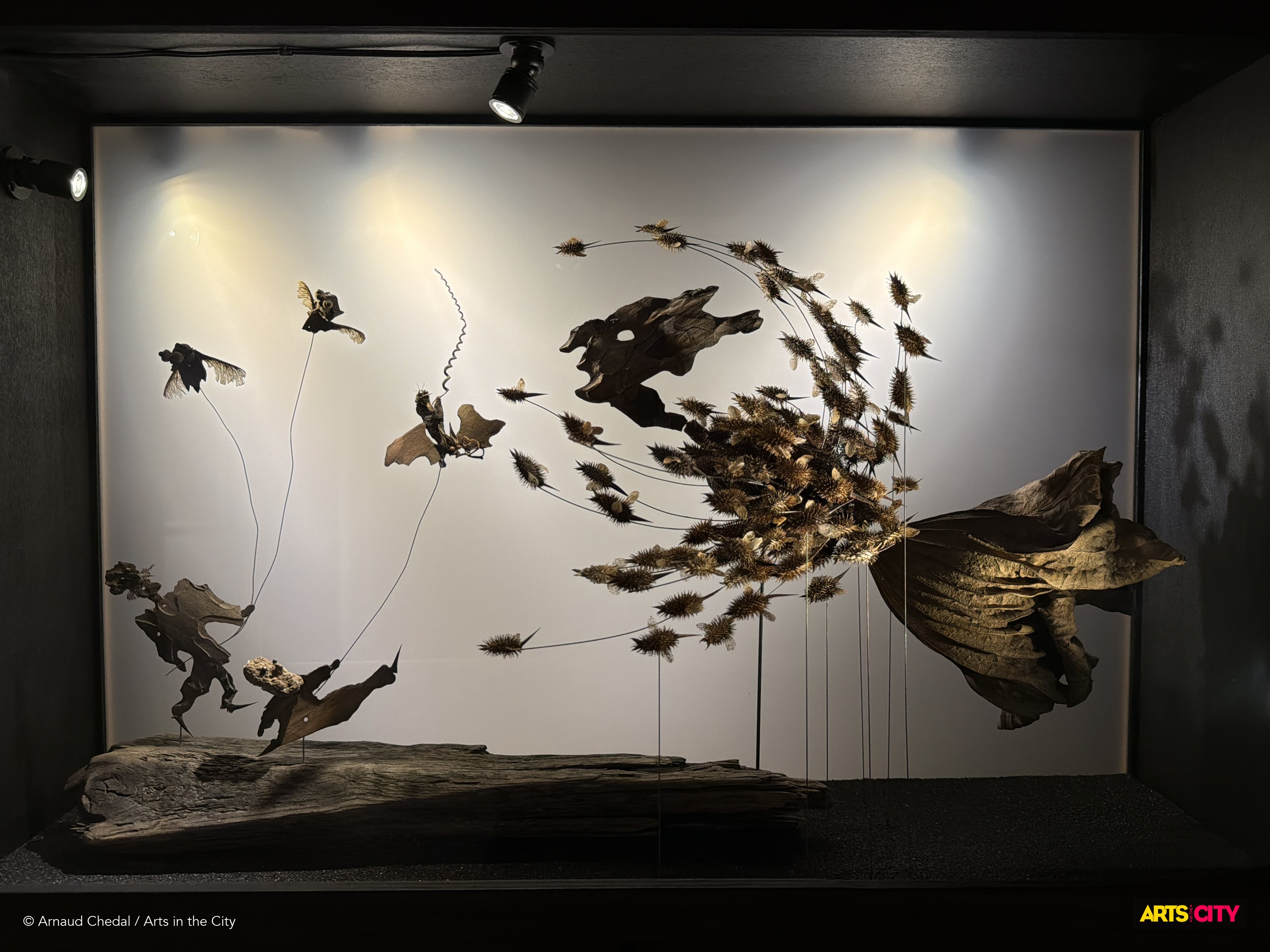
Frédéric Beauchamp was an animation colorist at Gaumont, working on Oggy and the Cockroaches and Space Goofs. The son of two biology professors, since 2021 he has been creating microcosms where plant, organic, and mineral elements are held in equilibrium within a confined space, what he calls "frozen movement." Here, The wind rises: driftwood, maple samaras, a water lily leaf, rose thorns, and black sand.
Easy Sacha has been tattooing since 1998. After working at the Tribal Act studio, then for nine years alongside Tin-Tin, he founded his own studio, the Mystery Tattoo Club, in 2008. He has worked for Jean-Paul Gaultier, Hermès, and Yves Saint Laurent, and his tattooed interpretation of a Mucha work was featured in the retrospective at the Musée du Luxembourg. Here, a two-meter-long Self-Portrait made of papier-mâché, covered with carbon copies of all the tattoos he has applied.
Zoé Forget, a graduate of the ENS Louis-Lumière, photographs the body in relation to social and physical norms, notably alongside the burlesque troupe Kisses Cause Trouble. Since 2019, she has been sewing and braiding hair onto old erotic photographs. “I’m not trying to contradict their gaze, but rather to reinterpret it,” she says of these models who have become anonymous objects of desire. Here, Ellianne, dreaming lightly.
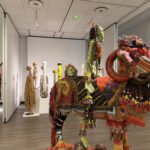
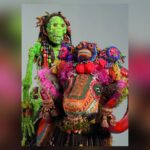
Benoit Huot, trained at the Beaux-Arts in Besançon, painted and engraved before creating his first funerary figures in 2007. Since 2011, he has been covering taxidermied animals—weasels, foxes, mouflons, bulls—with fabric, transforming them into shamanic figures. Here, Cavalier: a full-length mouflon, a rider on its back, which, according to him, "transitions from a hunting trophy to a fabulous animal on its way to the other side."
Philippe Jacq first gained recognition with a series of portraits of artists shot on Super 8, including Louise Bourgeois, Patti Smith, and Nick Cave. Since 2001, he has been assembling patchwork-like paintings, blending paint and fabrics gathered during his travels, "tracing rhizomes between the West and the East." Her works are in the Mudam Luxembourg and the FRAC Alsace. Here, Roadster: a sports car made of couture, embroidery, and basketry.
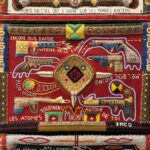
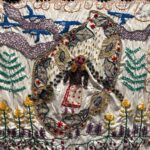
Alicia Lasne is self-taught. After a difficult academic journey, she made art her top priority in 2018 and since 2021 has been developing a textile practice—embroidered, sewn, knitted, beaded—to which she now incorporates bones, shells, and bark. “Like a harpillar, I embroider this anger, this fear, this feeling of injustice, of an Earth collapsing before our eyes.” Here, No. 76.
Mr. Djub created his first collages in 1983 and was discovered in 1989 by the critic Claude Roffat. Since 2010, he has worked exclusively with 19th-century engravings, which he cuts and assembles using scissors and a scalpel, without any retouching or reproduction. He describes himself as "emotionally connected to the Dadaists" and to Max Ernst. Under the name Djubaka, he is also a music programmer for France Inter. Here, Amusette rue Kugluktuk.
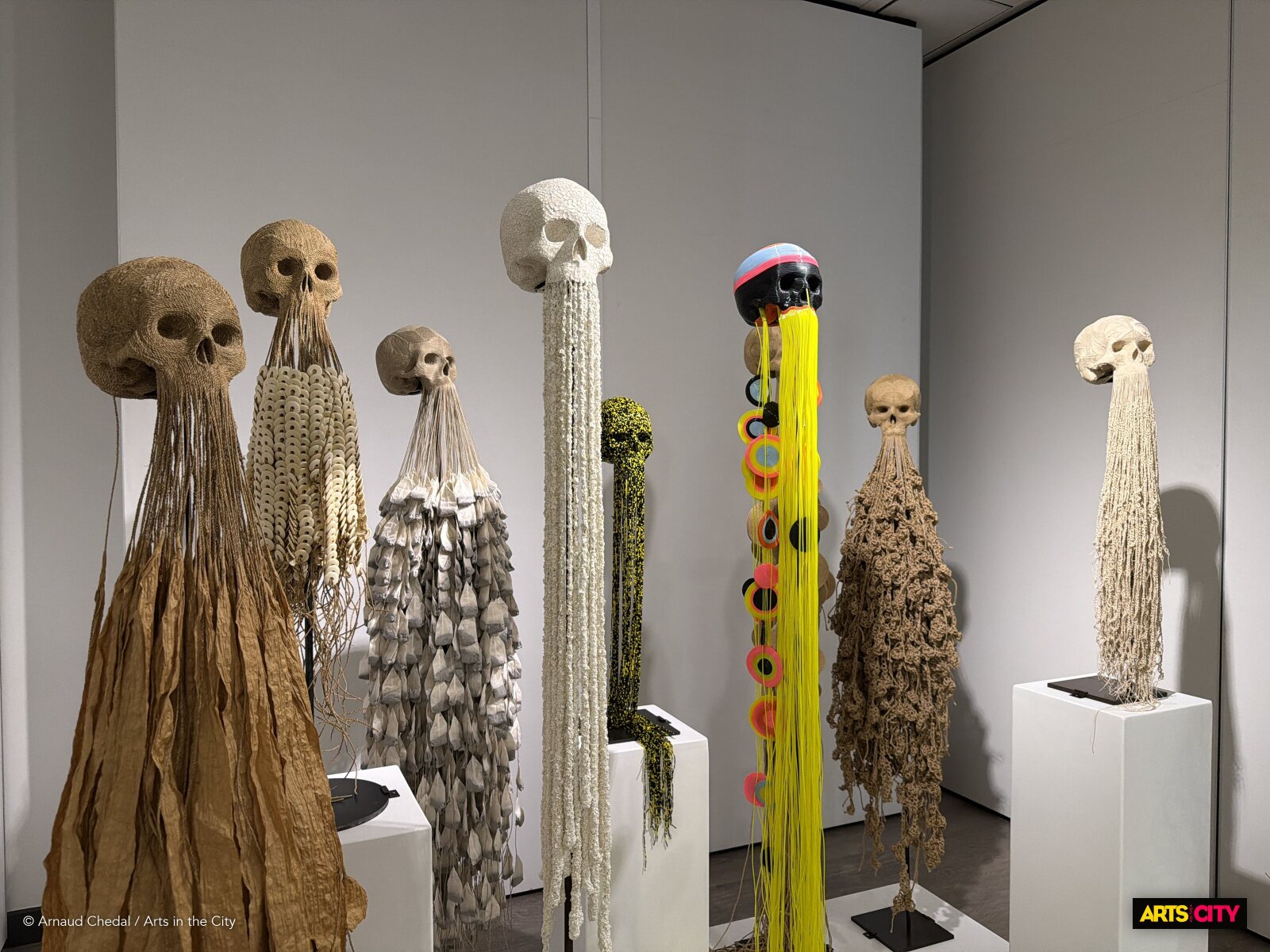
Jim Skull, born François Faure and raised in New Caledonia, traveled extensively throughout Oceania, India, and Asia from his teenage years. He created his alter ego in 1980 and has since depicted only the human skull: starting with a mold of a single skull, he explores fibers, cords, pigments, beads, and organic textures in a layering gesture he describes as hypnotic intuition. "I seek to effect a form of resurrection: to transform the macabre object into an icon of beauty." »
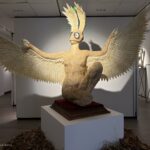
Paul Toupet grew up surrounded by the tribal art collected by his parents, fascinated by the Nuba people of Sudan. Since the 2000s, he has sculpted life-size works in beeswax, ash, leather, clay, rope, and resin, in successive series—White, Black, Blue, then Flamboyance, Lace, Allotropic. Winner of the Taylor Foundation Sculpture Prize in 2022, exhibited at the Louvre-Lens. Here, My Goddess Harmony, two meters across, from the Lace series.
The artist who brings them together, Anne Richard, has been fighting for forty years against the idea that some materials are worthy of being used as art and others are not. Forty years to make seashells cease to be seashells.
Find our other favorites in our top new exhibitions in Paris.
LE VAL FLEURY
From October 16, 2026 to January 31, 2027
5 allée du Val Fleury, 91190 Gif-sur-Yvette - RER B, Gif-sur-Yvette station
Tue. to Sat. 2 pm - 6 pm, Sun. 2 pm - 6:30 pm
Free admission