


Séraphine Louis. From Senlis, Without Rival

Centre Pompidou-Metz
From October 31, 2026 to April 12, 2027

From October 31, 2026, to April 12, 2027, the Centre Pompidou-Metz is bringing together more than eighty works by Séraphine Louis, including six giant canvases from 1928-1930. This exhibition moves the painter beyond the realm of naive art and places her firmly within modernism.
 

1

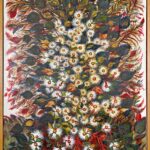
She signed her work "without rival." Séraphine Louis, known as "Séraphine de Senlis," painted with Ripolin, the industrial lacquer used in construction, sometimes placing her canvases on the floor, sometimes vertically, and would return to the cracks to rework them. The Centre Pompidou-Metz opens the exhibition with six giant canvases from 1928-1930, on loan from the Centre Pompidou, MoMA, Senlis, and the Maillol Museum: leaves bearing eyes, bleeding fruit, feathers transformed into petals, overflowing the frame.

Large formats were then the domain of history painting; she incorporated fruit into them. More than eighty of the hundred or so catalogued works are brought together, representing almost all that remains of her oeuvre.

These are followed by displays on botany, the palette, spirituality, and on Wilhelm Uhde, the German collector for whom she worked as a housekeeper and who, from 1912 onward, purchased her work: he provided her with the stability that made large-format paintings possible, until the 1929 stock market crash ruined him. She was interned in 1932 at Clermont-de-l’Oise and died there ten years later without ever picking up a paintbrush again.

She was relegated to the category of Naïve art, that shelf where painters without formal qualifications are placed. The museum is taking her out of that category and placing her at the heart of modern art. In front of Fruits, two meters of Ripolin paint on canvas, the signature seems modest.

Find our other favorites in our top new exhibitions in the regions.


CENTRE POMPIDOU-METZ
From October 31, 2026 to April 12, 2027
1 Parvis des Droits-de-l’Homme, 57000 Metz
Open daily. Except Tuesdays, 10am-6pm
Price: €7 to €14 - Free for under 26s

Learn more

Vous aimerez aussi…

Exposition Henri Matisse - Alex Katz, Le silence de la peinture, musée Matisse de Nice
  • Unavoidable
  • Contemporary

Henri Matisse - Alex Katz Exhibition, The Silence of Painting, at the Matisse Museum in Nice

MATISSE MUSEUM
From October 28, 2026 to January 18, 2027

From October 28, 2026 to January 18, 2027, the Matisse Museum in Nice entrusts all its rooms to Alex Katz, born in Brooklyn in 1927. Conceived with the painter and curated by Aymeric Jeudy, the exhibition creates a dialogue between his works and the museum's collection.

Étudiante du DN MADE Spectacle du lycée des Coteaux portant sa création
  • Fashion

Chagall Couture exhibition at the Marc Chagall National Museum in Nice

MARC CHAGALL NATIONAL MUSEUM
From October 10, 2026 to January 18, 2027, then from February 6 to May 23, 2027

The Marc Chagall National Museum in Nice is exhibiting Chagall Couture from October 10, 2026 to May 23, 2027: seventy-six costumes and headdresses created by students from the Lycée des Coteaux de Cannes based on the painter's painted and engraved work.

Grande tapisserie colorée de Fernand Léger représentant des femmes à bicyclette, accrochée dans l'exposition Fernand Léger du Musée Matisse au Cateau-Cambrésis
  • Classic

Fernand Léger exhibition, bodies in celebration, world in colours, at the Matisse Museum in Le Cateau-Cambrésis

HENRI MATISSE DEPARTMENTAL MUSEUM
From October 17, 2026 to January 27, 2027

From October 17, 2026 to January 27, 2027, the Henri Matisse departmental museum in Le Cateau-Cambrésis dedicates its first exhibition to Fernand Léger. Bold colors, bodies in motion and joie de vivre, with a dialogue with Nadia Léger.

©GBERGER-CD54
  • Classic
  • Unavoidable

Le château de Lunéville, une splendeur retrouvée

Château de Lunéville
Espace Permanent

Alors que l’on franchit le portail qui sépare le château de la ville, comment ne pas être aussitôt envoûté par les parterres du jardin à la française, ses sculptures et ses jets d’eau, par le parc des Bosquets et ses bassins, sans compter l’architecture luxuriante du XVIIIe siècle ? Non, vous n’êtes pas à Versailles, mais au château de Lunéville.