



Exhibition of the permanent collections of Dalí Paris

















WATCHING IS INVENTING
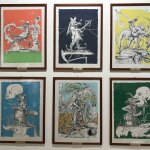
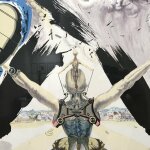
Salvador Dalí, the master of surrealism, is based in Paris! Nestled in the heart of Montmartre, a famous artists' village of the last century where he lived with Gala, the museum exhibits the largest private collection of genius in France. Composed of more than 300 works, it is the fruit of the extravagant inspiration of this emblematic artist of Surrealism: theatrical sculptures, erotic, dreamlike or irresistibly funny drawings, poetic objects and furniture, populate the phantasmagorical universe of inventor of soft watches.
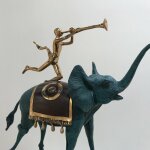
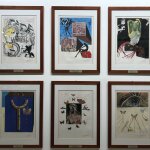
The multiple facets of the Catalan master, the surreal 3D, everything becomes subject to transformation by the magic of dreams: the Space Elephant with wader legs seems to flee weightlessness, a watch flows from a branch and a snail spreads its wings. Tales and wonders of an encyclopedic culture, Dalí was fascinated by the great themes of literature, mythological or religious. He illustrated universal texts using multiple techniques: Alice in Wonderland, Romeo and Juliet , Don Quixote, The Bible… But also more personal works, such as { 36}Moses and monotheism or The Alchemy of the Philosophers. Each of them becomes a true object of art under his hands. Sculpture, drawing, watercolor, engraving, lithography, Dalí Paris invites us to explore the major themes of his work such as dreams, mythology or even sensuality. His sculptures constitute one of the major aspects of his work: “I am much more important as a cosmic genius than as a painter, my delirium and my lucidity are much more important than my painting{ 50}”. Thus, his surreal three-dimensional images translate his crazy associations with very strong symbols, which make his messages more meaningful, which you will finally be able to decode.
Did you know? Dalí's watch in the shape of a camembert dripping under the summer sun symbolizes Dalí's time which is not linear: it is like space, elastic. The unexpected plasticity of the watch offers a vision of time which, as science has since demonstrated, is not perceived in the same way by each individual depending on the time of day or their occupation.