

Discovery: The Château de la Ballue and its Alice gardens…
Ballue Castle
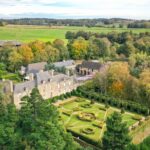
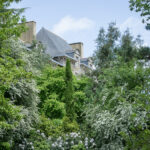
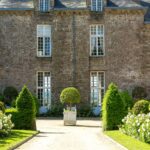
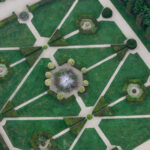
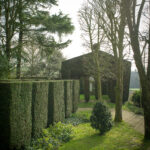
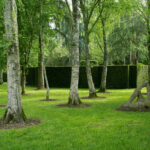
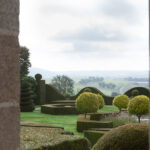

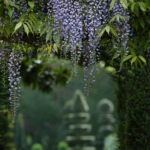
Alice's Wonderland garden really exists! And we visited it. Nestled in the Breton countryside, near Mont Saint-Michel, the Château de la Ballue is one of the hidden gems of our heritage. Here, we discover one of the most beautiful gardens in the world, a true masterpiece of topiary and Mannerist art. A sumptuous and luxuriant setting that this year celebrates the fiftieth anniversary of its rebirth, offering us an unforgettable sensory experience, blending history, natural beauty, and artistic innovation.
Like Alice in Wonderland, curious and filled with wonder, we discover here a magical space, imbued with dreams and mischief. A meticulously sculpted world of greenery welcomes us into its impressive Cour d'Honneur, a formal flower garden that highlights the north façade of the Louis XIII château. Bordered by three majestic linden trees over 250 years old and large orange tree planters from Versailles, this stately entrance sets the tone for the visit.
Next comes the Mannerist garden, a predecessor of the French formal garden. Inspired by 16th-century Italian creations, it plays with curves and irregularities to surprise and charm. The "trap grove," typical of Italian Baroque gardens, conceals fountains that appear as we approach, while a clematis climbs the walls, adding a romantic touch to this playful space. Nothing is left to chance in this marvelous living tableau, each verdant chamber revealing a facet of the site's history.
The fern grove, with its collection of perennial ferns and Dicksonia antarctica, pays homage to the castle's artisanal past. The mysterious, dark, and enigmatic grove evokes a living cathedral guarded by imposing thuja trees, offering an almost mystical experience. The scented grove is a true delight for the senses. The fragrance of jasmine and honeysuckle envelops visitors, while a gentle fountain murmurs in the background. This intimate, shaded space is a charming respite within the garden's layout.
The central point of the garden, the "rotule," unites the two broken diagonals and plays with remarkable perspectives. Further on, the open-air theater, inspired by the commedia dell'arte, offers a grassy stage surrounded by vibrant beech trees, creating an open-air performance space, open to the sky. The 22-foot-long wisteria avenue is another highlight of the garden. The wisteria vines, supported by yew columns, form a spectacular archway that invites strolling and reverie. This avenue leads to the Temple of Diana, an architectural tribute to the goddess of the hunt, offering magnificent views of the Baroque garden below.
1
Spanning eight hectares, these gardens, constructed like a tangle of surprises, lead us astray in a maze of shapes and colors, playing on perspectives, geometric volumes, and the contrasts between shadows and light that combine throughout the day. So? Would you prefer to lose yourself in the maze of 1,500 yew trees, relax in the open-air theater, or admire the contemporary sculptures scattered throughout the park?
A Little History… Built in the 17th century, the Château de la Ballue is distinguished by its understated and elegant architecture, typical of the region. After years of grandeur, the estate fell into decline starting with the Second World War. At that time, it was but a shadow of its former self, languishing in oblivion and abandonment. It was in 1974 that the publisher and archaeologist Claude Arthaud, captivated by the austere beauty of the place, undertook to revive the gardens, creating the botanical masterpiece we know today, blending past and present in a sculptural setting unique in France.
Did you know? Marie-Françoise Mathiot-Mathon, the current owner of the estate, is committed to preserving this unique heritage while integrating sustainable practices. Rainwater is collected for irrigation, and green waste is composted on site. No chemical products are used, ensuring the gardens are maintained in an environmentally friendly way. The commitment to biodiversity is also evident in the numerous species of birds and bats that inhabit the estate.
CHÂTEAU DE LA BALLUE
35560 Bazouges-la-Pérouse
Open daily until September 30
From October 1 to November 11: Thursday to Sunday, 10:00 AM to 6:30 PM
Open on public holidays, daily during the All Saints' and Easter holidays - Visits by appointment the rest of the year
Admission: €10.50 - Reduced rate: €8.50 (students, ages 10-18, job seekers, people with disabilities) - Free for children under 10.
More information on the gardens and the castle